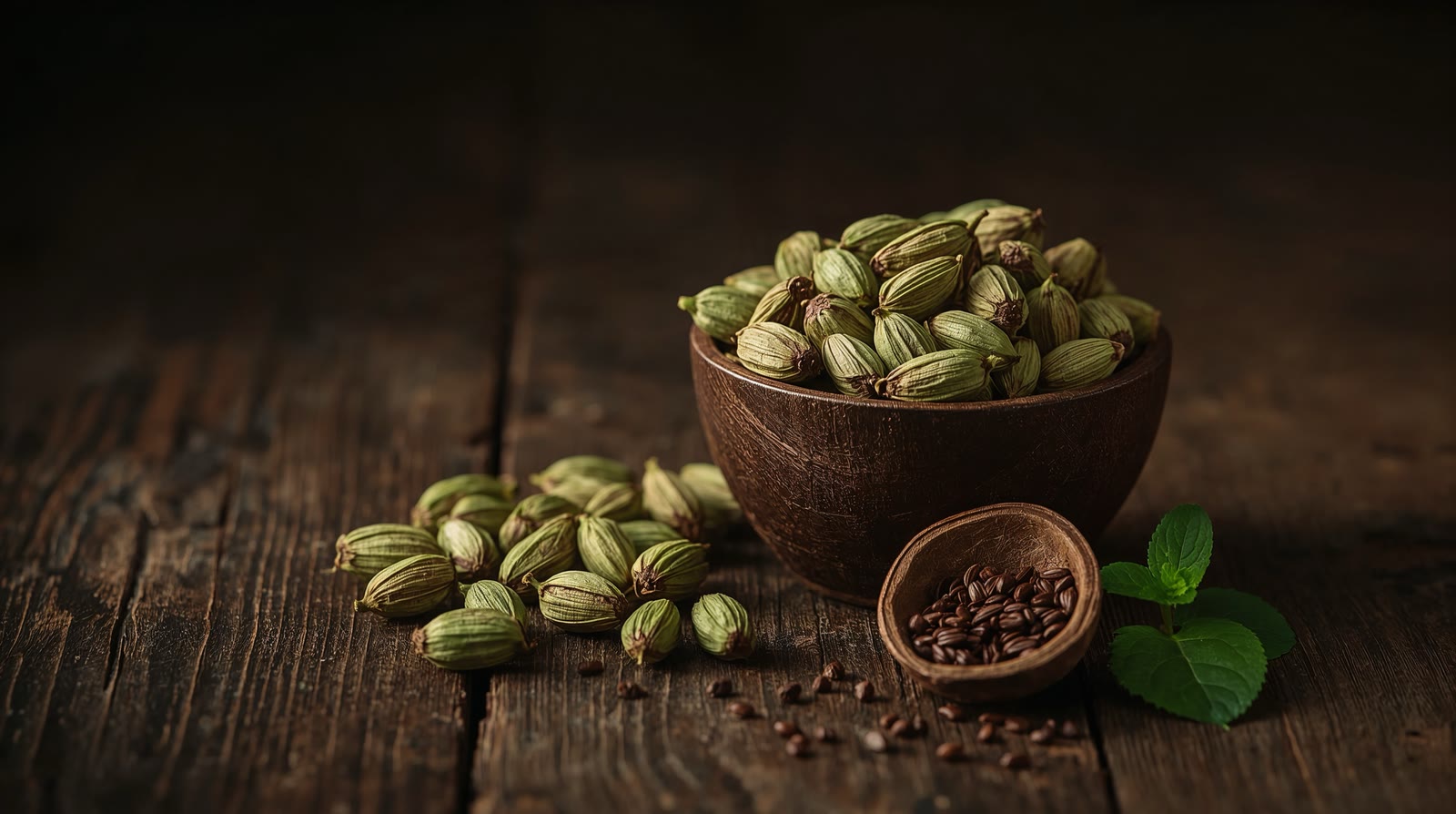
Ayubowan! Today, let us get to know a small green spice with a very big fragrance. Cardamom, or enasal. What it is, how it grows in Sri Lanka's misty hills, and what it may do for our health.
What it is
A pod from the ginger family
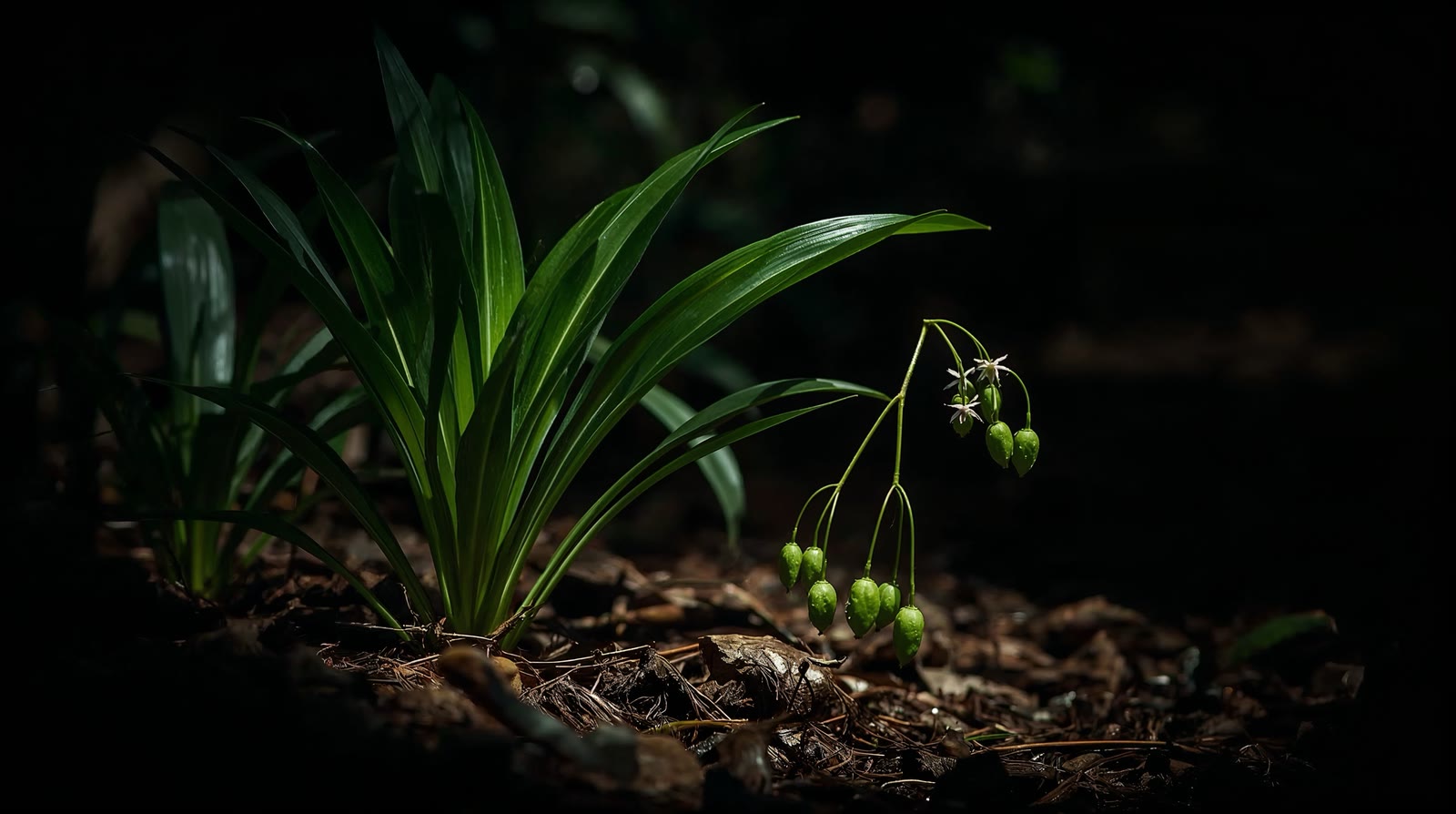
Cardamom grows on a tall, leafy plant of the ginger family. It is not a tree, and not a vine.
Its flowers grow on long stalks from the base of the plant, and each flower becomes a small green pod. These pods are the spice.
Scientists call it Elettaria cardamomum. It first grew wild in the forests of South India.
In Sinhala, we call it enasal.
- The plant
- A tall, leafy plant of the ginger family
- The spice
- Small green pods from its flowers
- Scientific name
- Elettaria cardamomum
- In Sinhala
- Enasal


History
The queen of spices
Cardamom is a very old spice. Sanskrit texts from more than two thousand years ago already mention it.
Arab traders carried it across the seas, and made it a spice of world trade.
If pepper is the king of spices, cardamom is the queen.
And even today, by weight, it is one of the most expensive spices in the world.
- Over 2,000 years ago
- Named in ancient Sanskrit texts
- World trade
- Arab traders carried it across the seas
- Queen of spices
- Pepper is the king, cardamom the queen
- Even today
- One of the costliest spices by weight

In Sri Lanka
At home in the misty hills
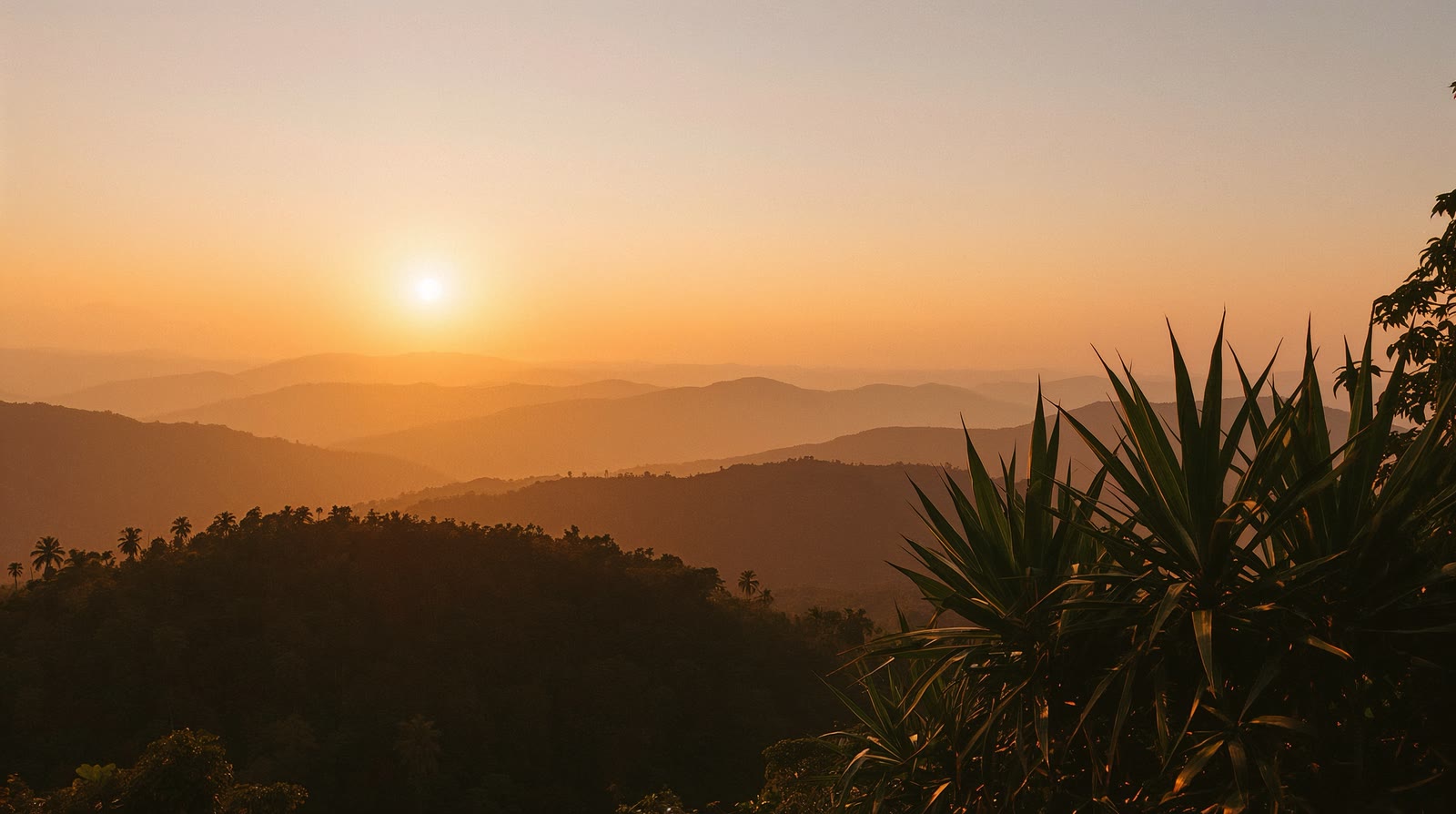
In Sri Lanka, cardamom grows in the cool, misty hills, above about six hundred metres, in districts such as Kandy, Matale, Nuwara Eliya, Kegalle and Ratnapura.
It loves shade. It grows best under tall forest trees, with about sixty percent shade.
That is why cardamom lands are often called spice forests.
- Where it grows
- Cool, misty hills above 600 m
- Districts such as
- Kandy · Matale · Nuwara Eliya · Kegalle
- It needs
- About 60% shade under tall trees
- Often called
- Spice forests

Grown in Sri Lanka
Three types of cardamom
Three types of cardamom are grown in Sri Lanka: Malabar, Mysore and Vazhukka. You can tell them apart by their flower stalks.
Malabar stalks lie along the ground. It grows in the lower hills, and its pods are round.
Mysore stalks stand upright. It grows higher up, and its pods are long.
And Vazhukka stalks lean halfway, between the two. Its pods are long too.
Harvest and curing
Picked by hand, dried with care
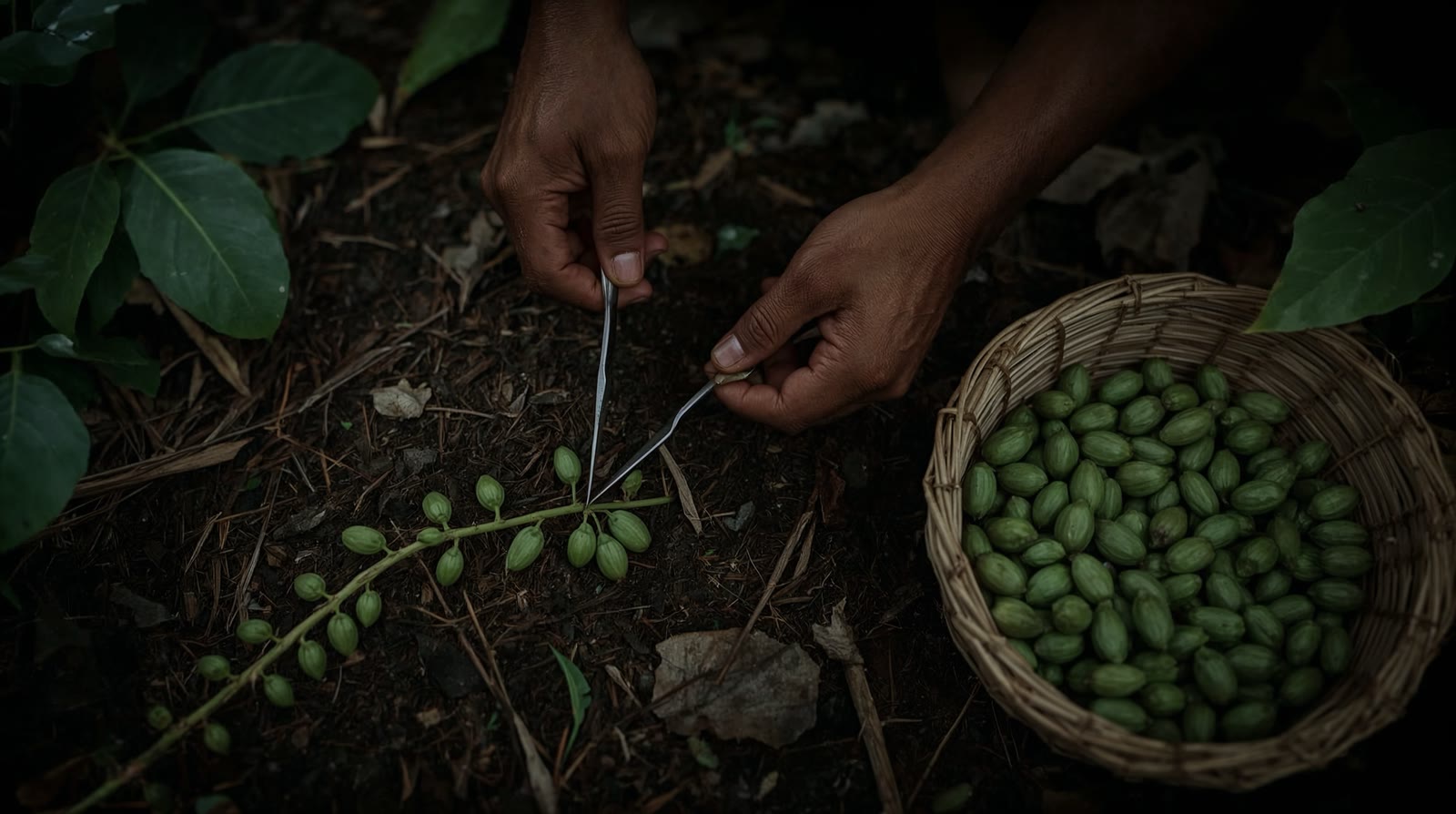
Cardamom gives its first harvest about three years after planting. From September to January, the pods are clipped by hand with small scissors, just before they are fully ripe.
The pickers come back every three to six weeks, to clip the pods that are ready.
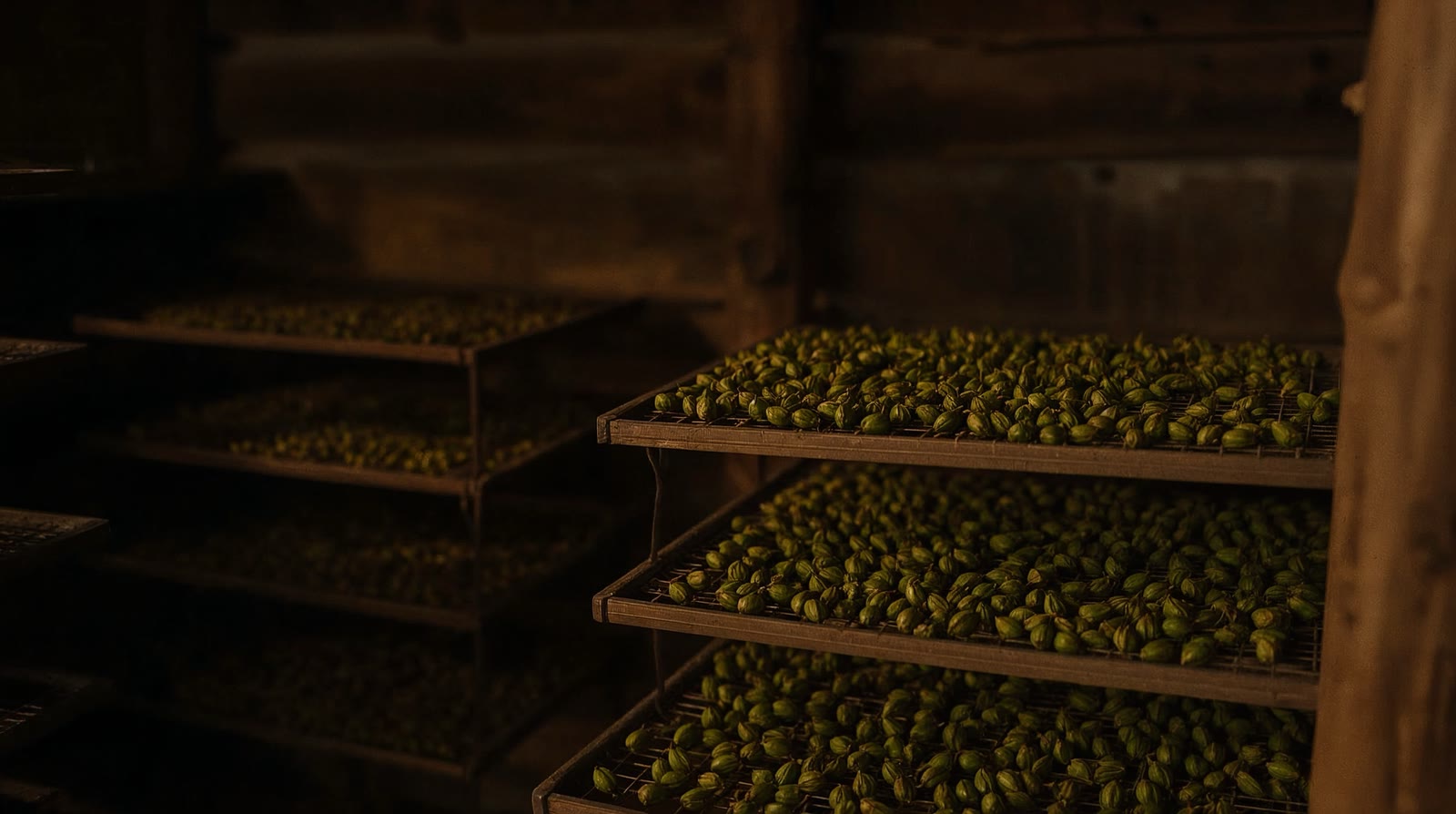
The pods are washed, then cured slowly on wire trays in warm air, at about forty-five to fifty degrees, for about a day and a half.
This gentle curing helps keep the pods green. The greenest pods earn the top grade: Lanka Green.
- Patience
- First harvest after about 3 years
- Step 1 · Pick
- Clipped by hand, September to January
- Step 2 · Cure
- Cured at 45–50 °C for about 35–40 hours
- Top grade
- Lanka Green
Inside the pod
Where the fragrance lives
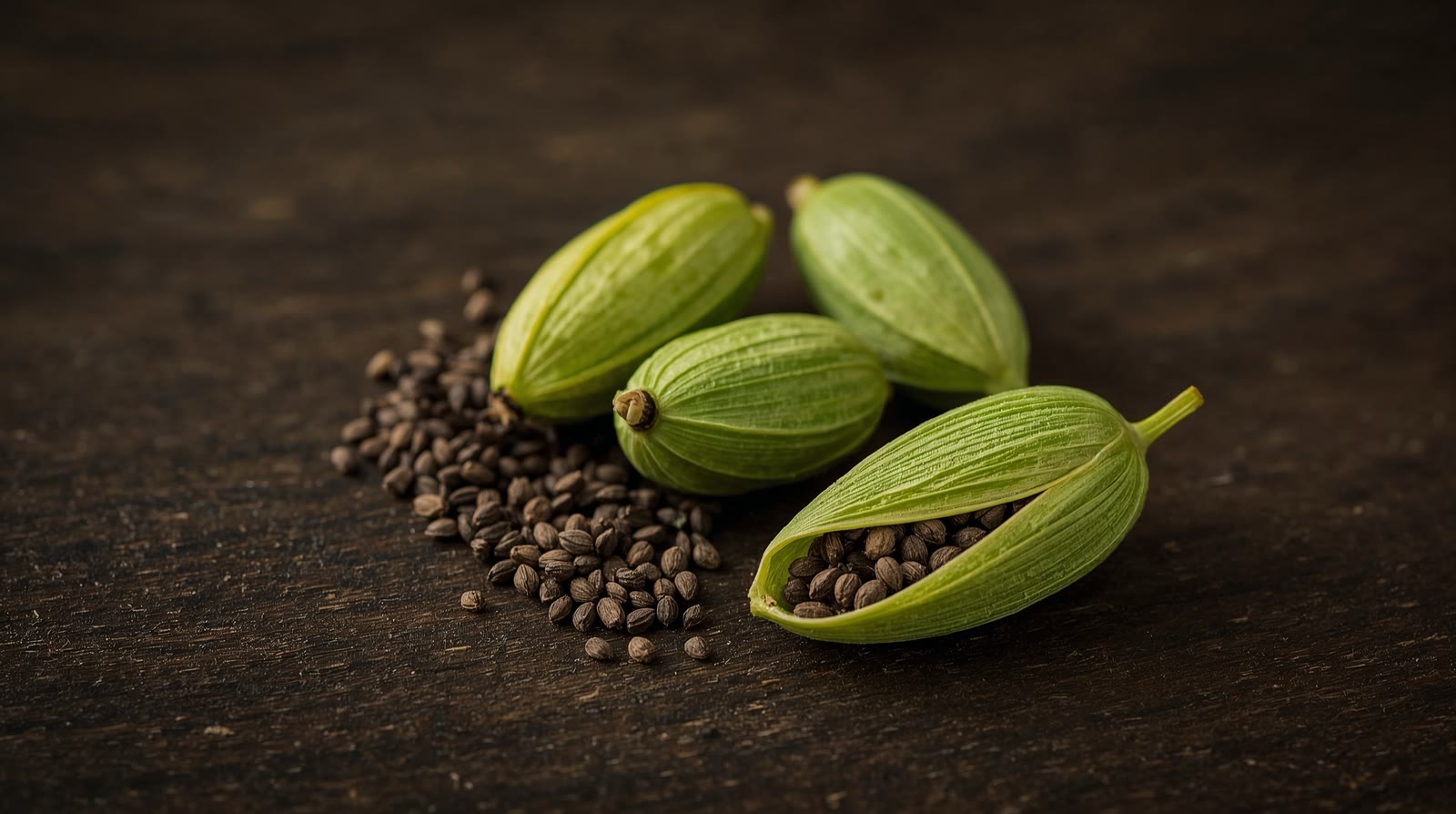
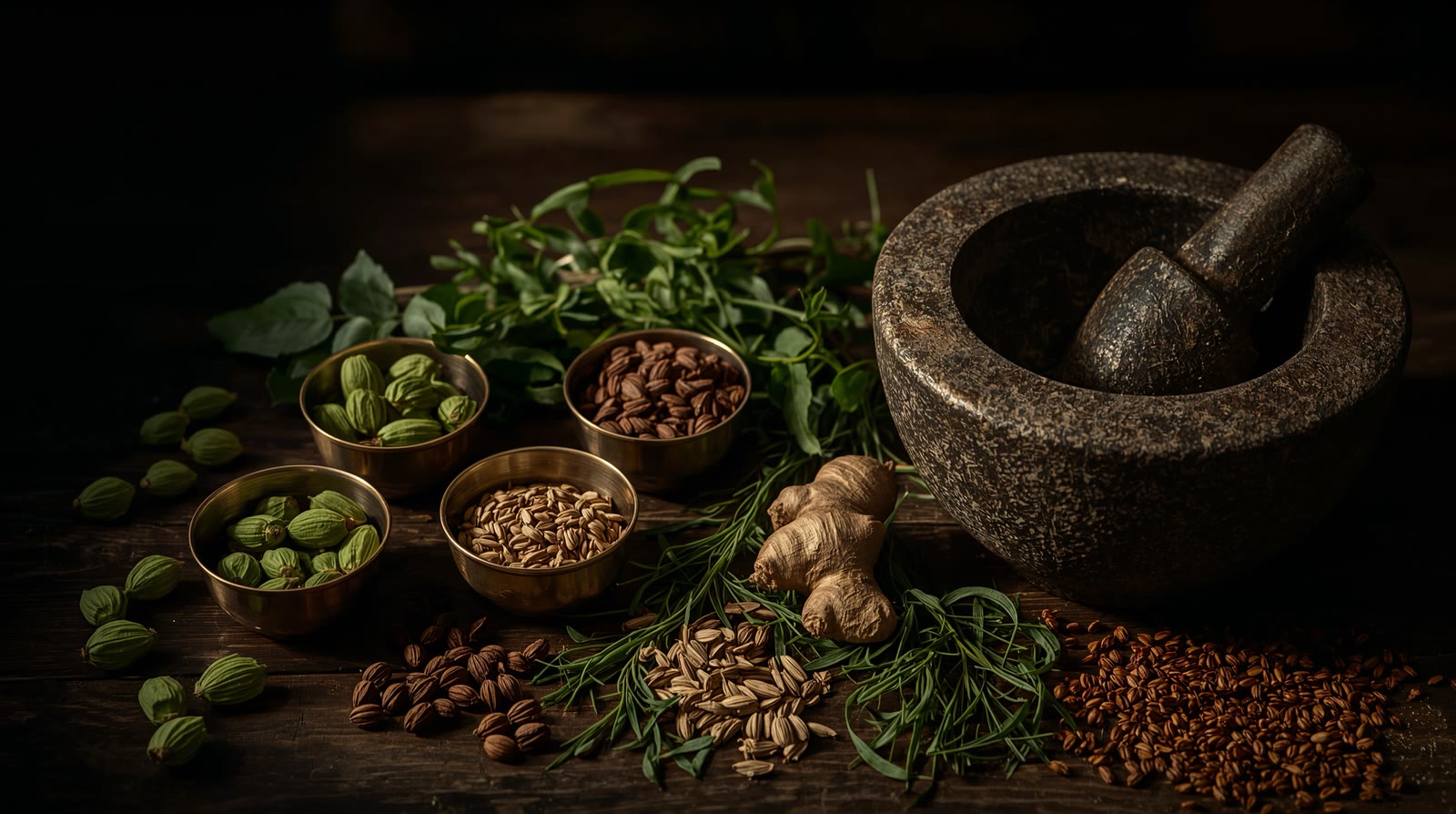
Open a pod, and you will find tiny dark seeds, packed inside three small chambers.
The seeds hold a fragrant essential oil. Compounds such as cineole and terpinyl acetate give cardamom its warm, sweet and slightly cool aroma.
Ground cardamom loses its aroma quickly, so it is best kept whole, and crushed just before use.
- Inside
- Tiny dark seeds in three chambers
- The aroma
- 1,8-cineole · α-terpinyl acetate
- A kitchen tip
- Keep it whole, crush just before use
Tradition and home
From Ayurveda to the kitchen
In Ayurveda, cardamom has long been used as a fragrant remedy, to help digestion and to ease a bloated stomach.
And many people chew a pod after a meal, to freshen the breath.
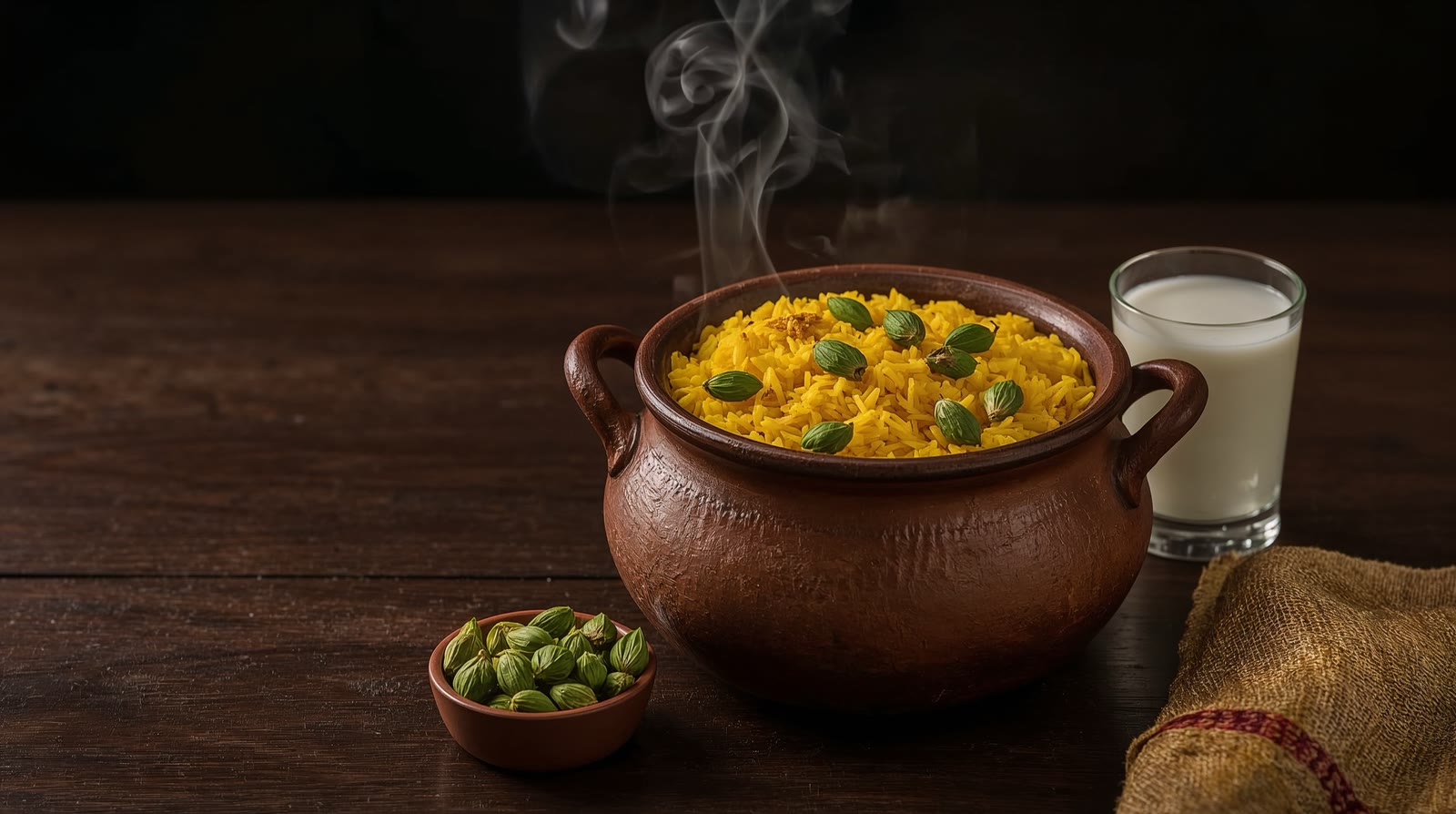
In our kitchens, it brings its fragrance to rice, curries, watalappam, and a warm cup of tea.
- Ayurveda
- Digestion and a bloated stomach
- A simple habit
- Chewed after meals for fresh breath
- In the kitchen
- Rice · curries · watalappam · tea
Research
What does research say?
So, what does research say about its benefits?
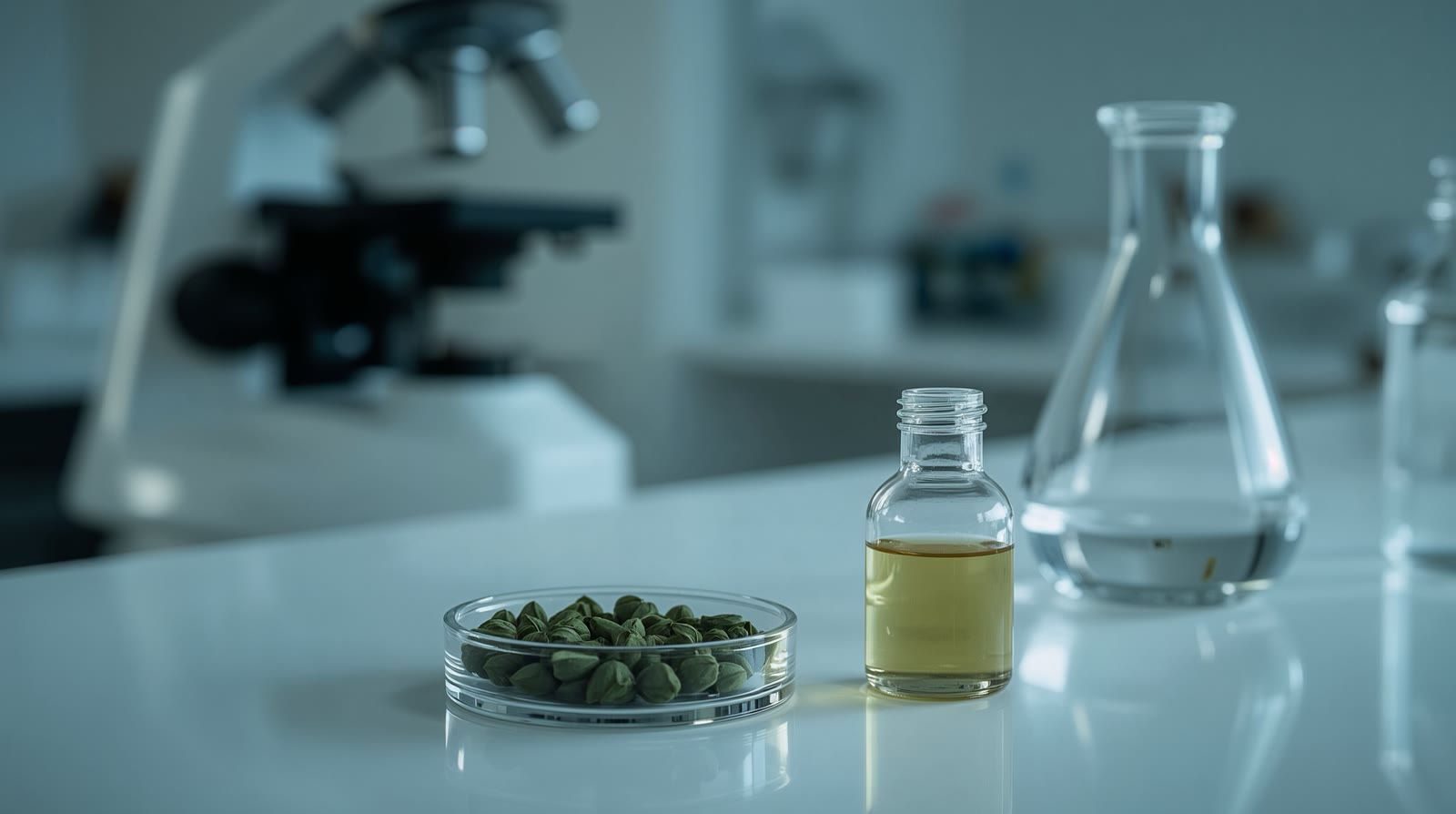
In laboratory studies, cardamom extracts and oil have shown antioxidant, anti-inflammatory and antibacterial effects.
A review of twelve small trials in adults found that cardamom lowered some blood fats, and some markers of inflammation, a little.
Other reviews found a very small drop in blood pressure.
But these studies were few, small and short. Scientists say larger studies are still needed.
- Laboratory studies
- Antioxidant, anti-inflammatory, antibacterial
- Review of 12 small trials in adults
- Some blood fats and inflammation markers fell a little
- Other reviews
- A very small drop in blood pressure
- But
- Larger, longer studies are still needed
Cardamom
A fragrant treasure
Cardamom. Enasal. A fragrant green pod from a shade-loving plant of our misty hills. The queen of spices.
A fragrant treasure of Sri Lanka, worth knowing, and worth protecting.
For general education only. This is not medical advice. Images are AI-generated illustrations, not documentary photographs.