Ayubowan! Today, let us get to know a tiny spice with a very big story. Black pepper. What it is, how it grows in Sri Lanka, and what it may do for our health.
What it is
The berry of a vine
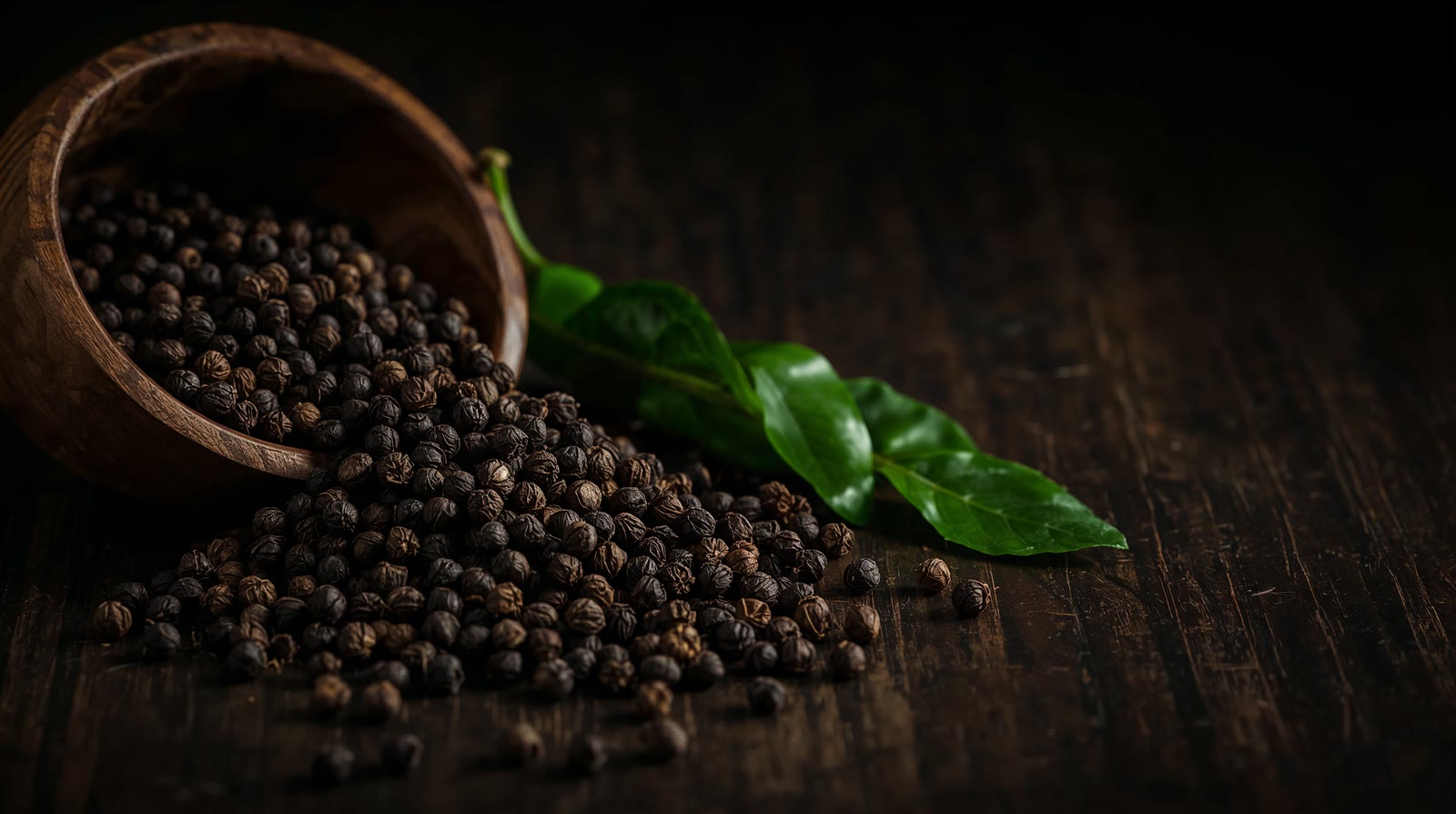
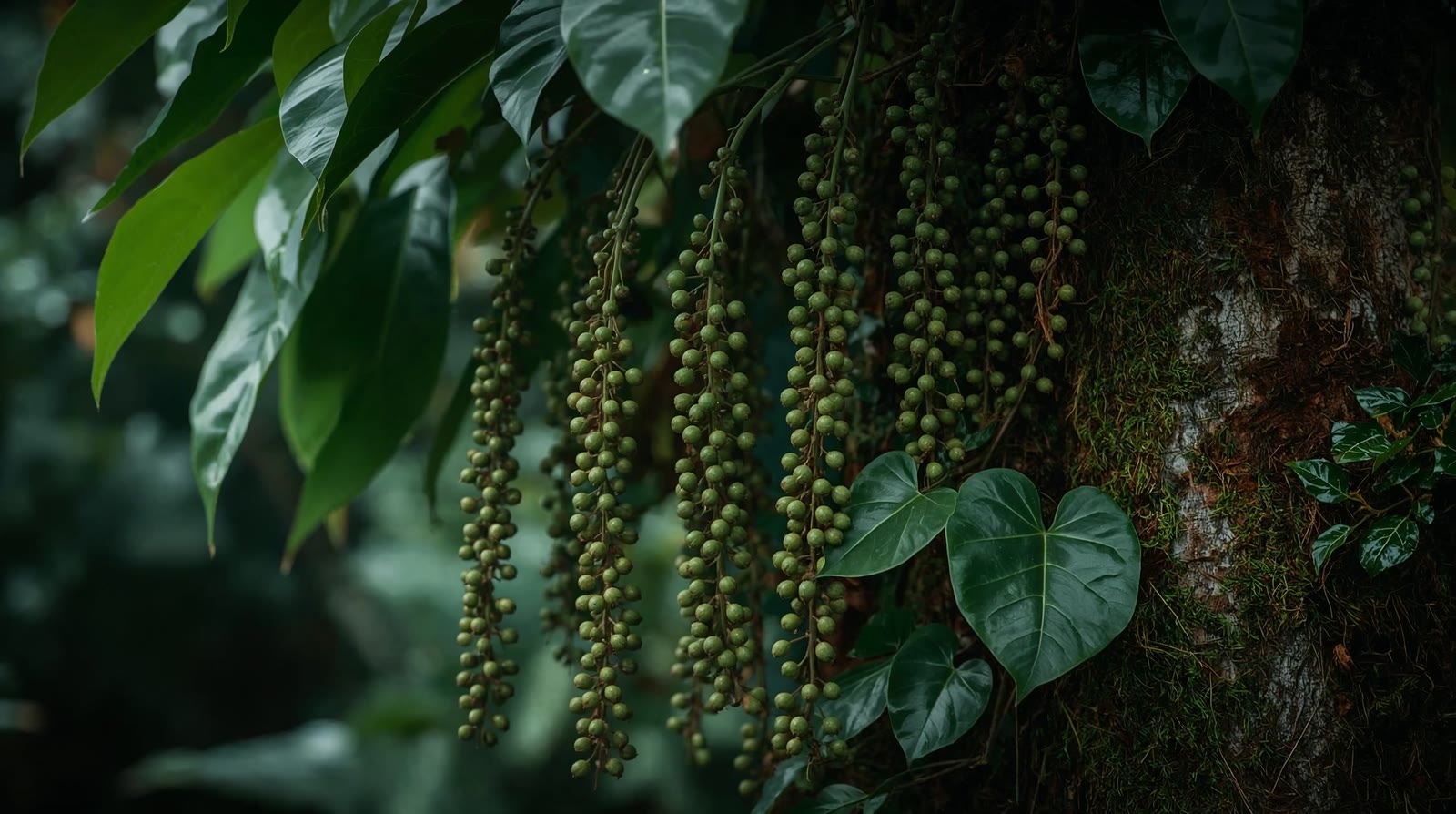
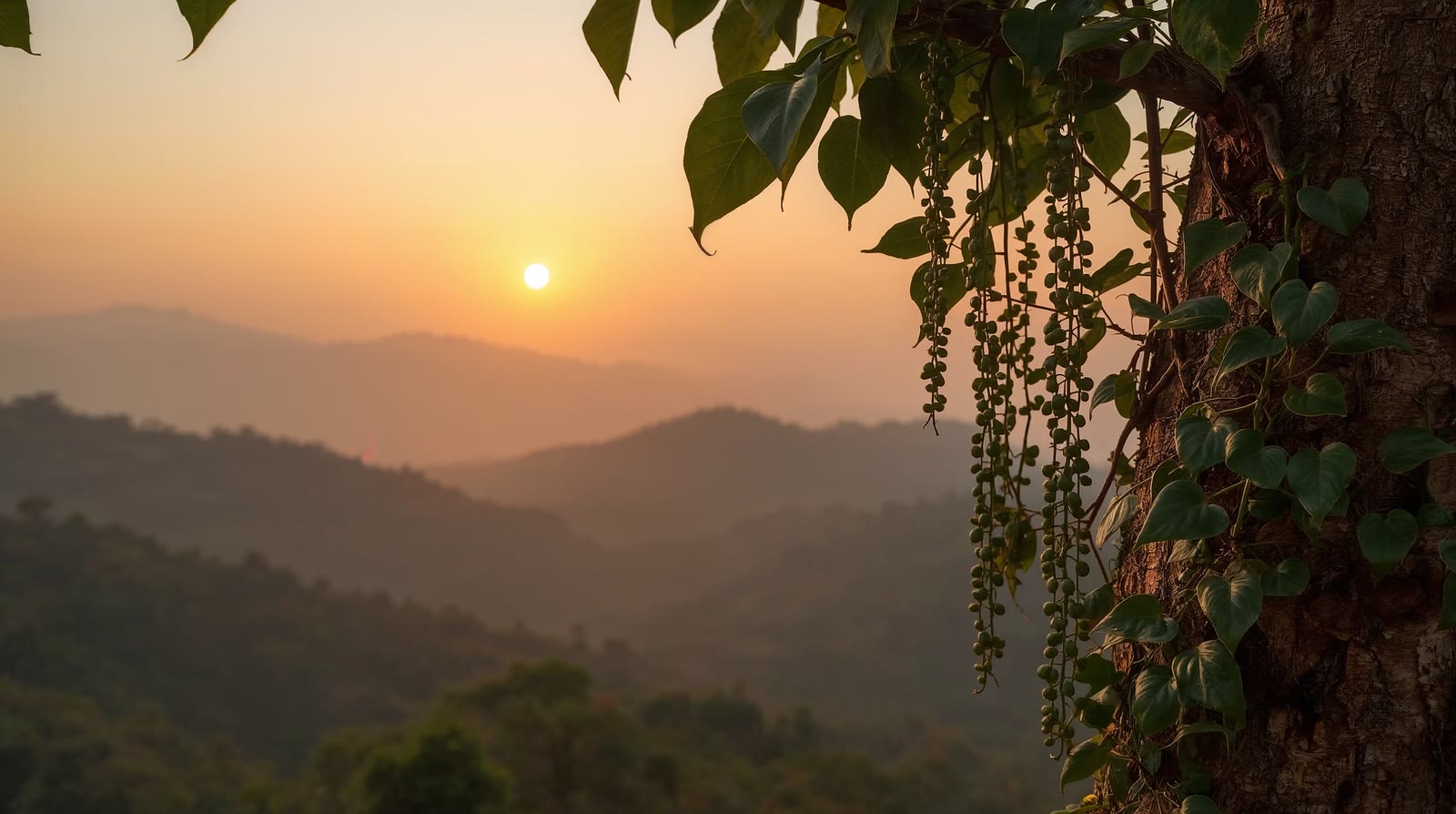
Black pepper does not grow on a tree, or on a bush. It is the small dried berry of a climbing vine.
Scientists call the vine Piper nigrum. Its first home is the rainforest of South India, and wild pepper vines grow in Sri Lanka's forests too.
In Sinhala, we call it gammiris.
- The spice
- Dried berry of a climbing vine
- Scientific name
- Piper nigrum
- First home
- Rainforests of South India
- In Sinhala
- Gammiris

History
Once as precious as money
Pepper is one of the oldest spices we know, and people still call it the king of spices.
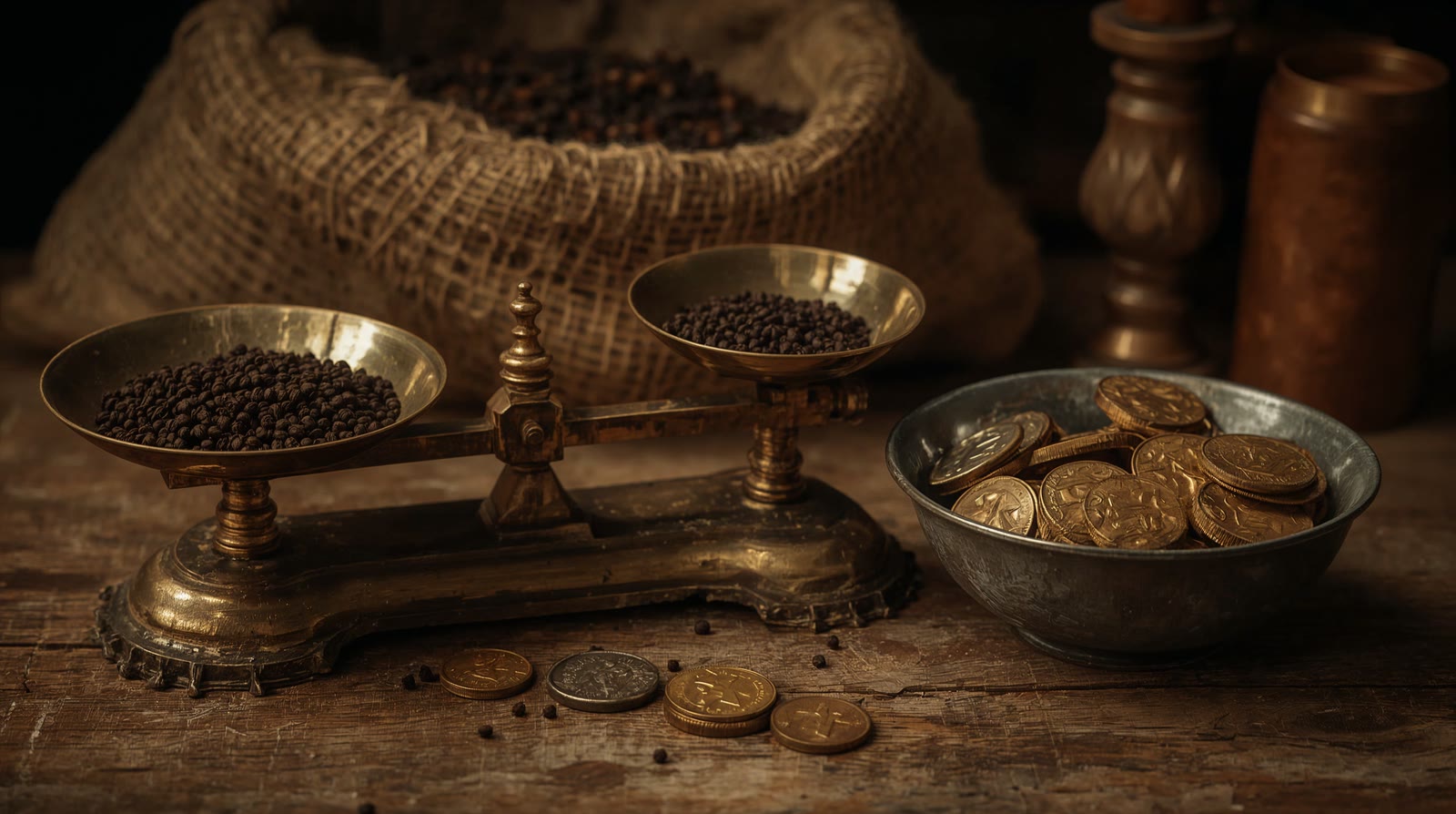
It was once so precious that it was used like money. In ancient Greece and Rome, even tributes were paid in pepper.
And the search for a sea route to the lands of pepper helped bring European ships to Asia.
Chilli reached our island only about five hundred years ago. Before that, pepper gave our food its heat.
- King of spices
- One of the oldest known spices
- Ancient Greece and Rome
- Tributes were paid in pepper
- Europe to Asia
- The search for a sea route to pepper
- Before chilli
- Pepper gave our food its heat
In Sri Lanka
At home in the hills
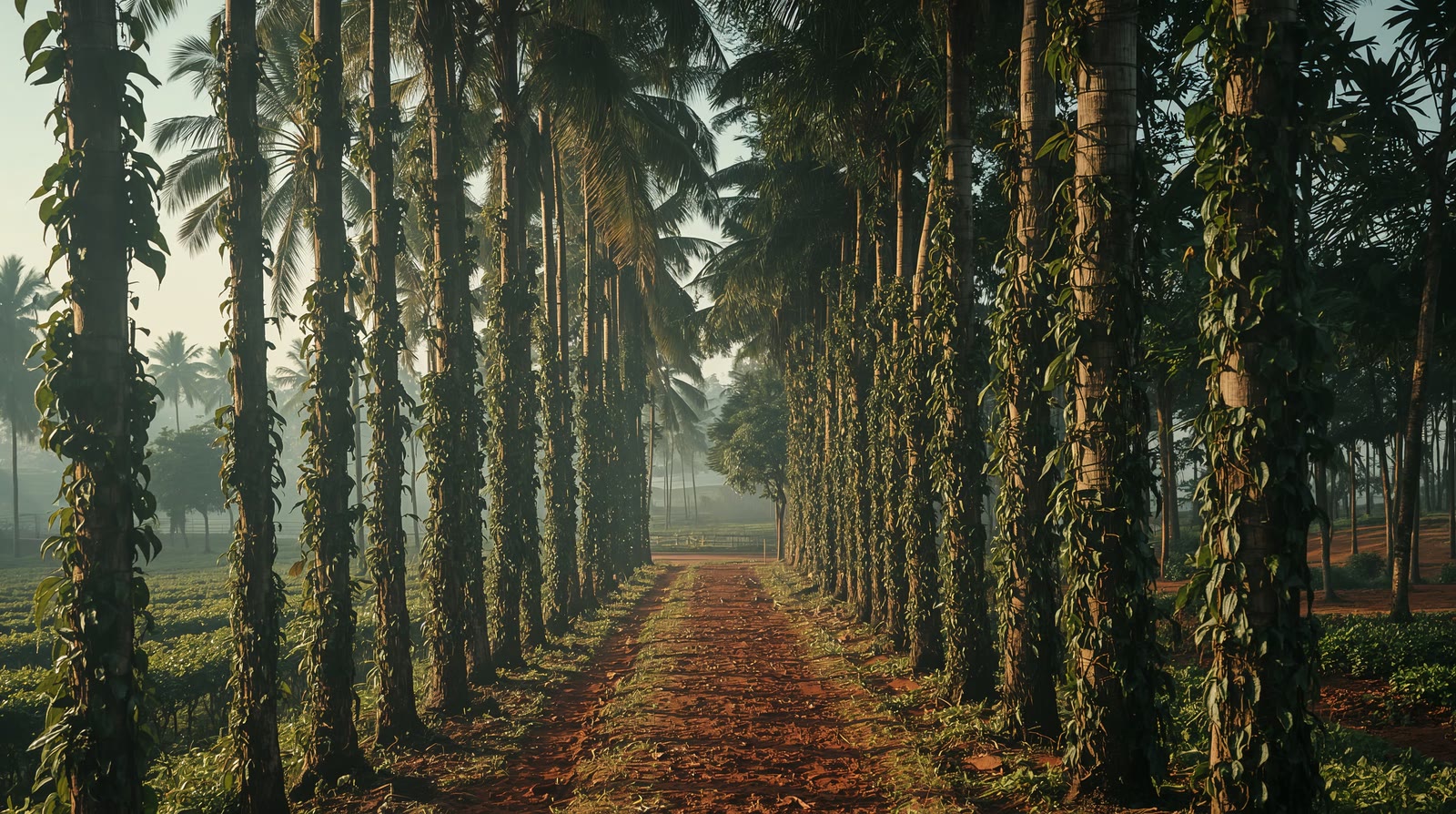
In Sri Lanka, pepper grows in the wet, green hill country, in districts such as Matale, Kandy and Kegalle.
The vines climb up living trees, such as gliricidia, often in home gardens, among coconut and tea.
- Where it grows
- Wet, green hill country
- Districts such as
- Matale · Kandy · Kegalle
- The vines climb
- Living trees such as gliricidia
- Often in
- Home gardens, among coconut and tea
The harvest
From green to black
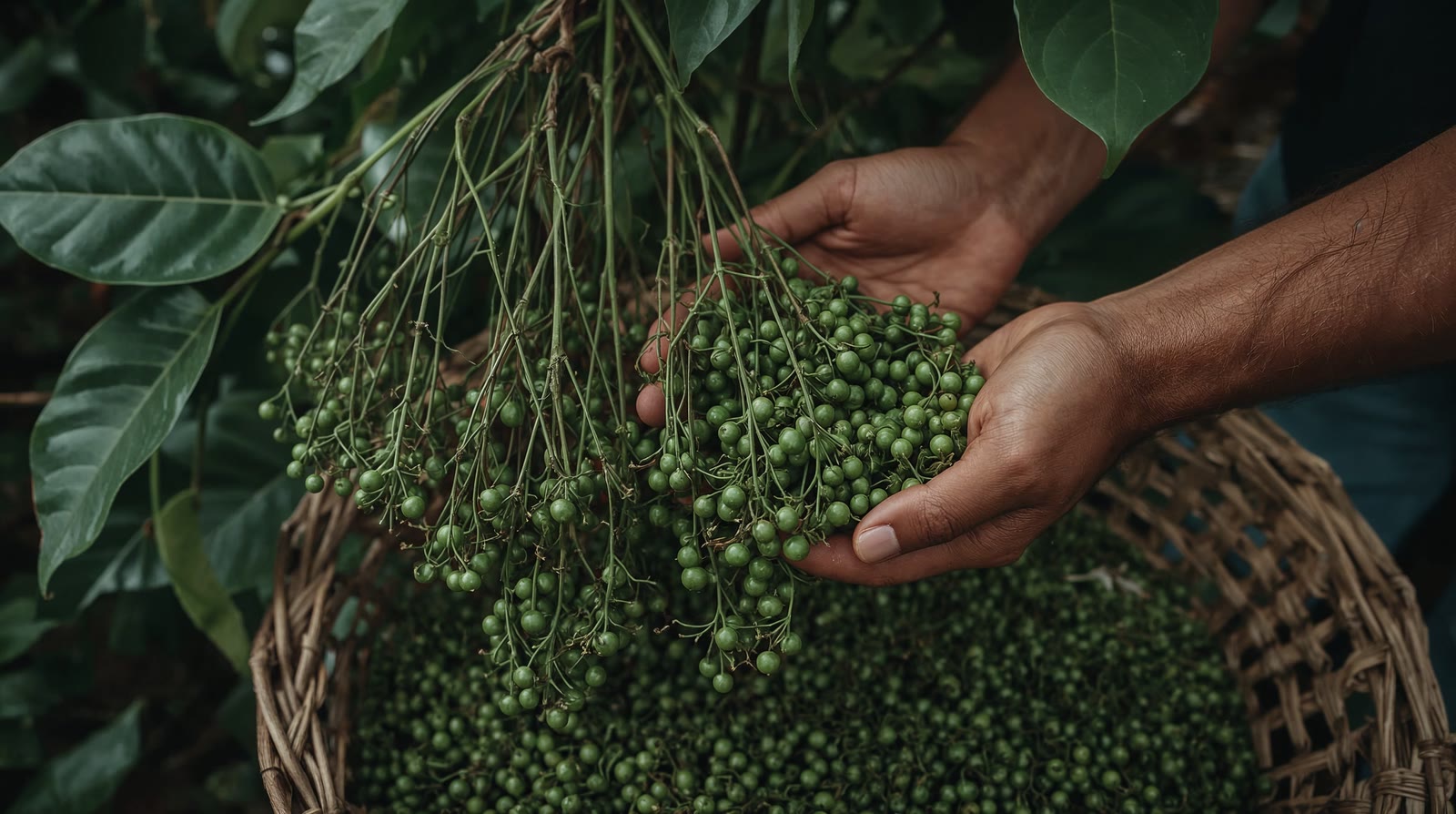
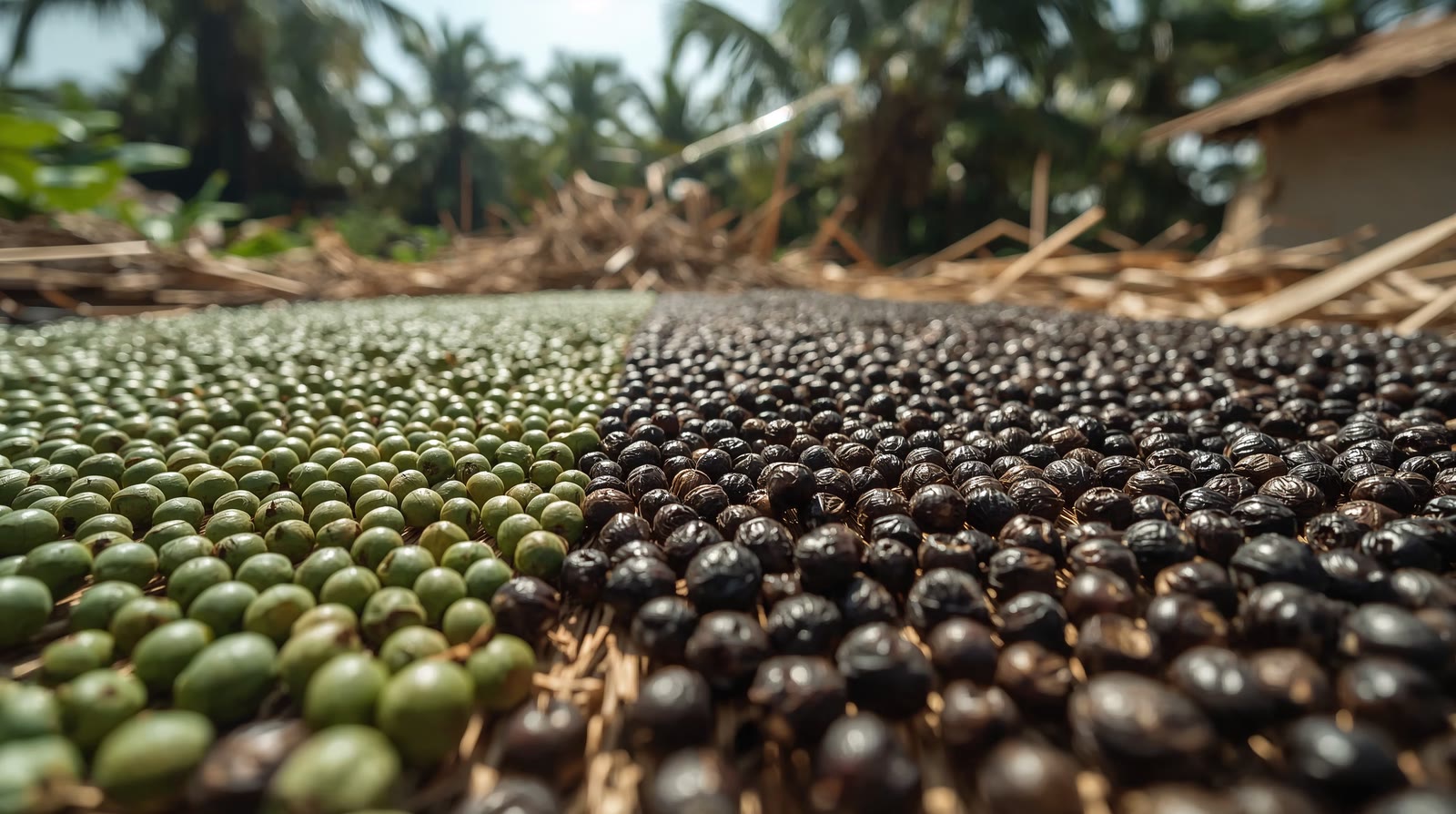
When the berries are full but still green, the spikes are picked by hand.
The berries are separated from the spikes, and dipped in boiling water for a few minutes.
Then they are dried in the sun for four to six days, until they turn black and wrinkled.
- Step 1
- Spikes picked by hand, full but still green
- Step 2
- Berries separated from the spikes
- Step 3
- Dipped in boiling water for a few minutes
- Step 4
- Dried in the sun for 4 to 6 days

One vine
Three kinds of pepper
From this one vine come three kinds of pepper.
Black pepper is the whole berry, picked green and dried in the sun.
For white pepper, fully ripe berries are soaked, and the outer skin is removed. Its taste is milder.
And green pepper is the unripe berry, kept green by pickling or quick drying.
Inside the berry
Where the bite comes from
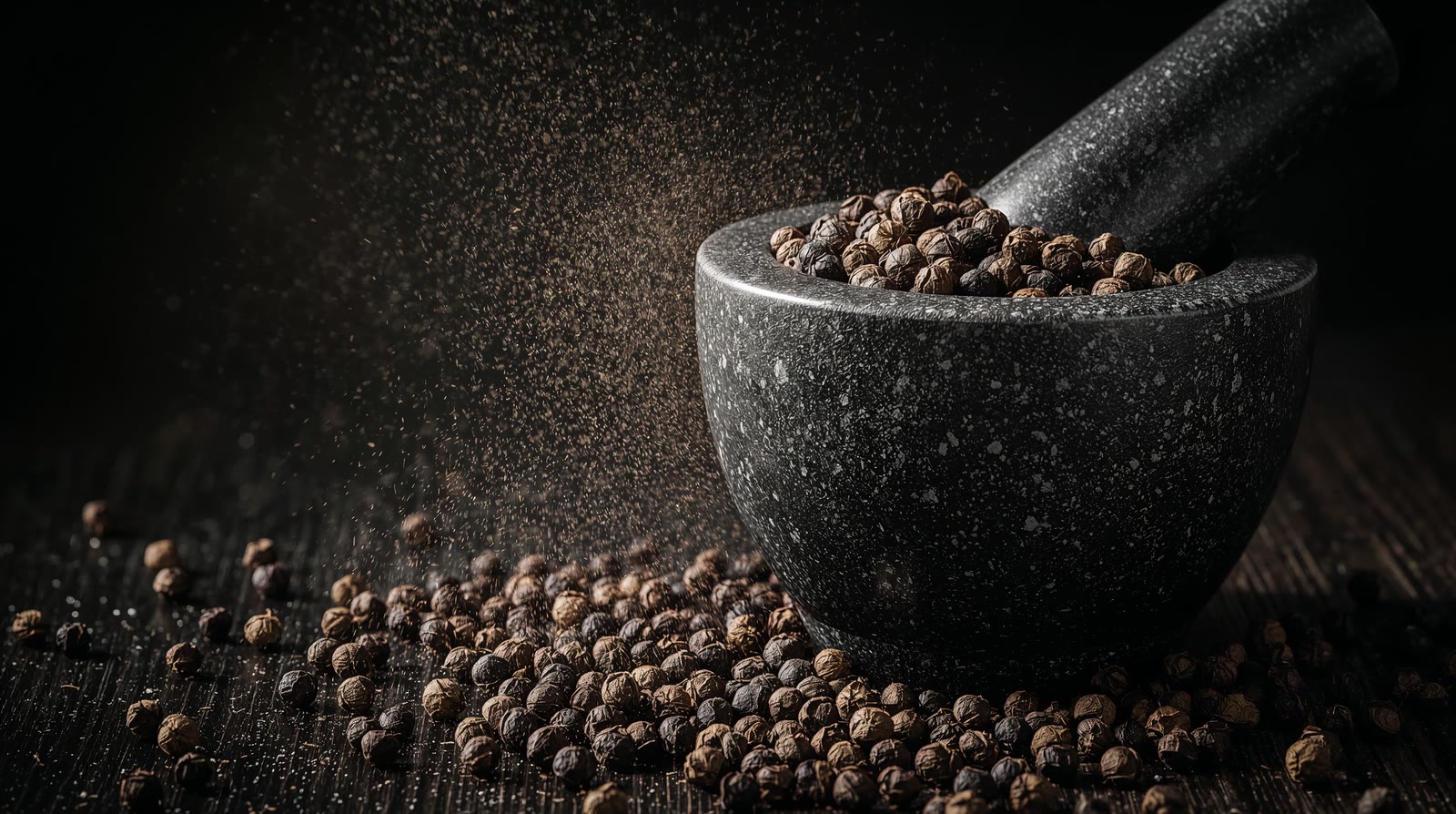
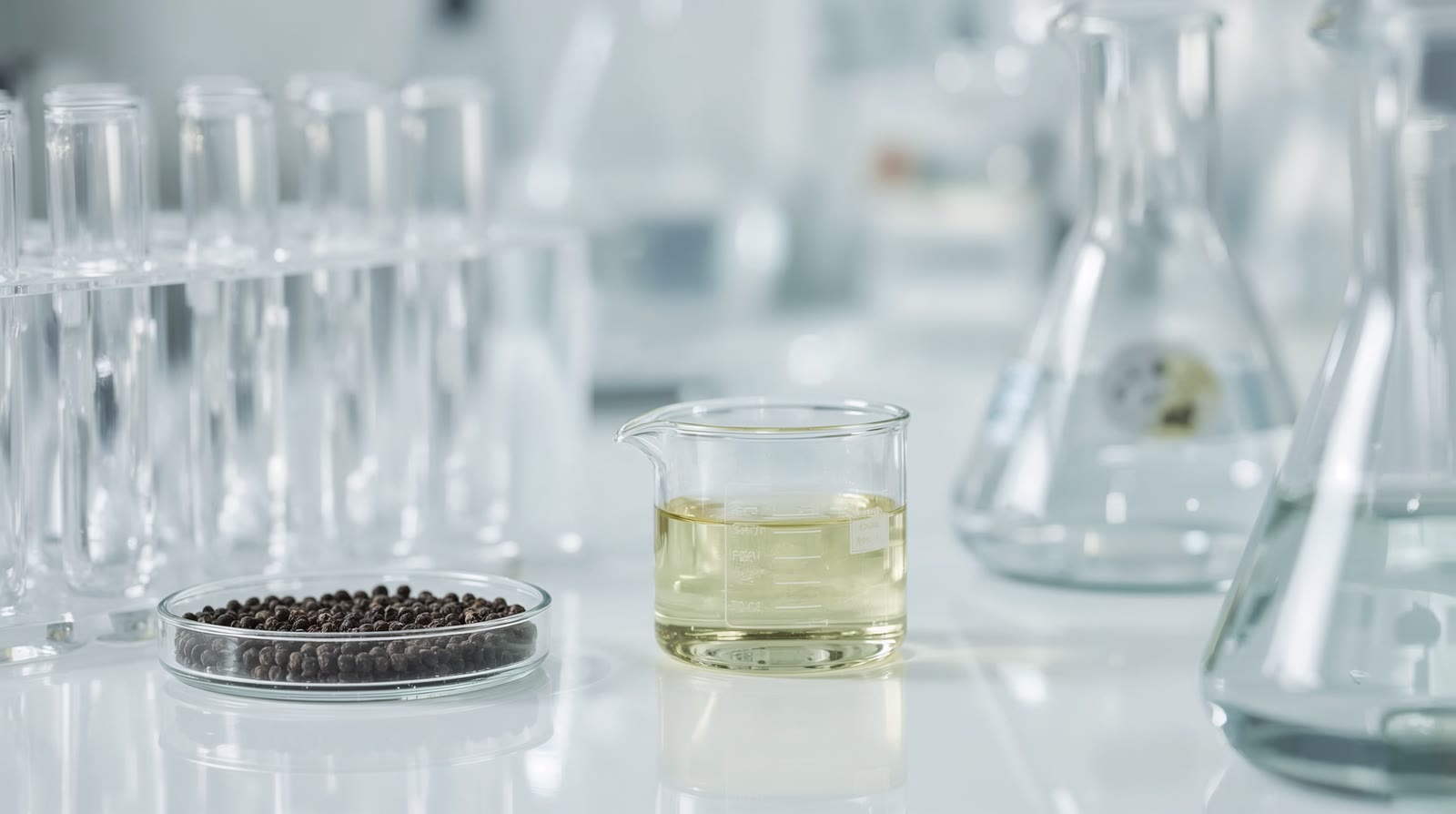
What gives pepper its bite? A natural compound called piperine.
Its aroma comes from an essential oil in the berry.
Sri Lankan pepper is valued for its strong bite. The newer local varieties hold about six percent piperine.
- The bite
- Piperine, a natural compound
- The aroma
- Essential oil in the berry
- Sri Lankan pepper
- About 6% piperine in newer local varieties
Tradition and home
From Ayurveda to the kitchen
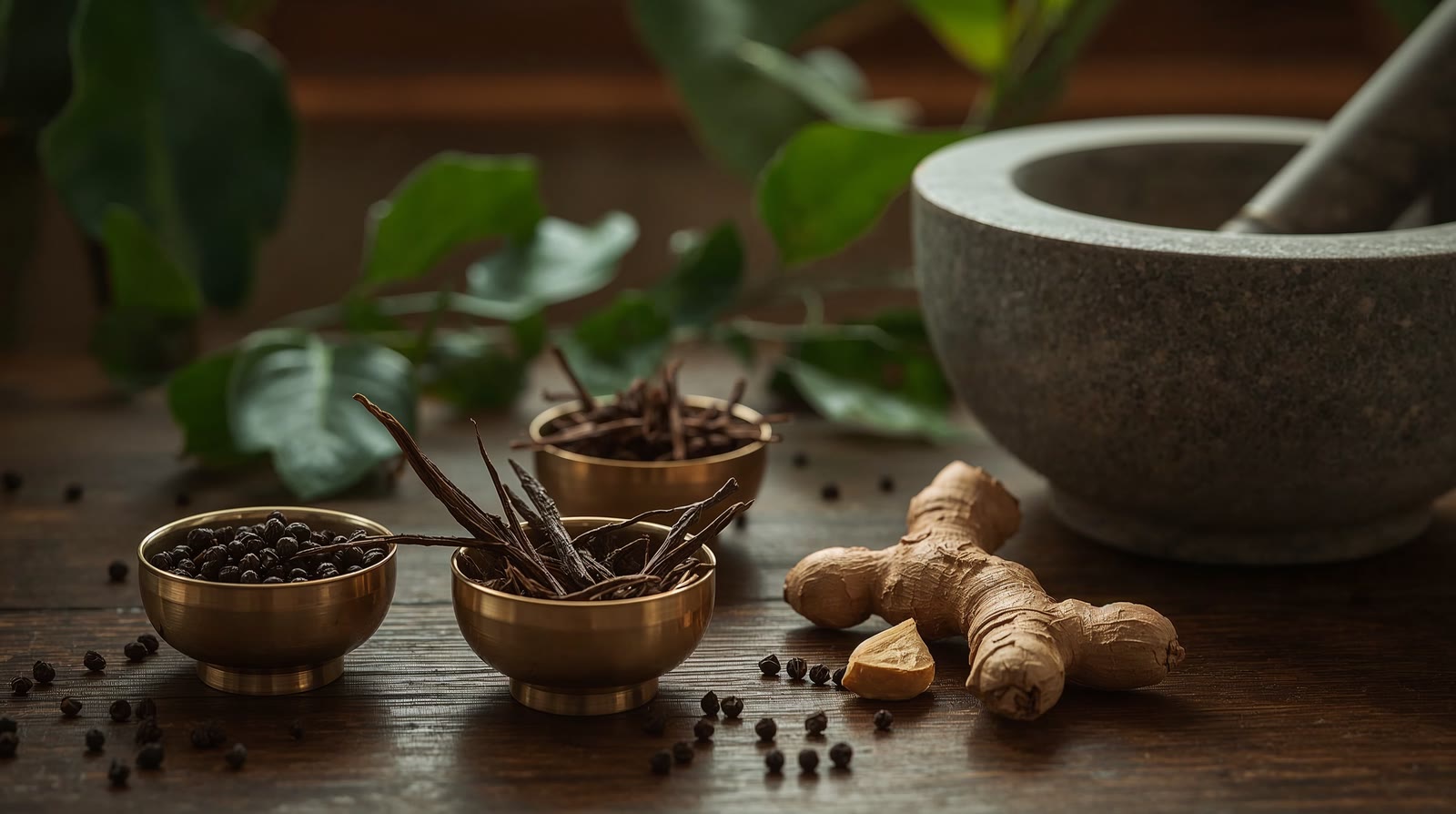
In Ayurveda, pepper is one of three warming spices in a mixture called trikatu, with ginger and long pepper. It has long been used for digestion, and for coughs and colds.
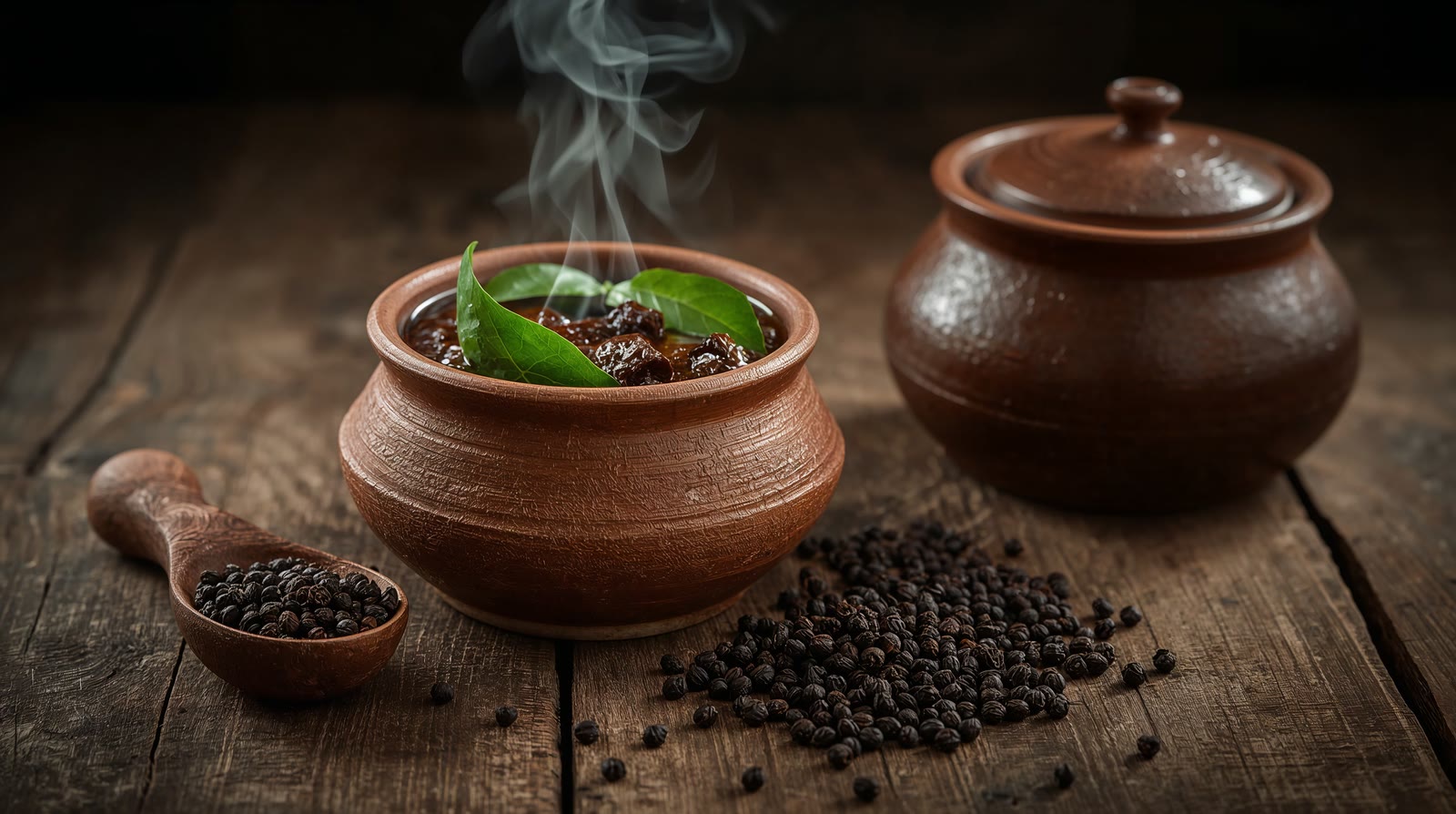
And in our kitchens, freshly ground pepper brings heat and fragrance to curries and soups.
- Ayurveda
- Trikatu: pepper, ginger and long pepper
- Long used for
- Digestion, coughs and colds
- In the kitchen
- Heat and fragrance for curries and soups
Research
What does research say?
So, what does research say about its benefits?
In laboratory and animal studies, piperine has shown antioxidant and anti-inflammatory effects, and it helped digestion.
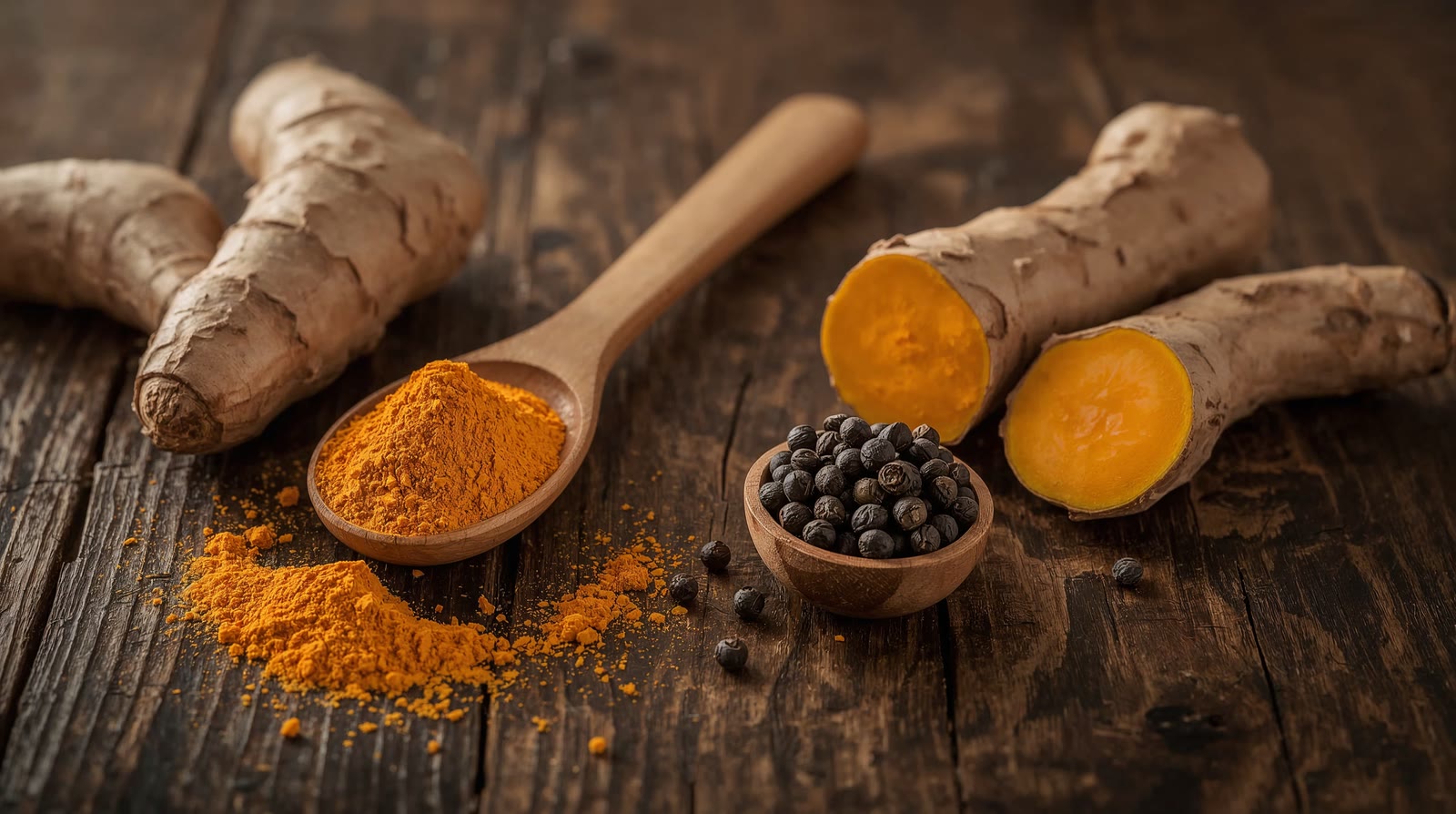
In one small study in people, piperine greatly increased how much curcumin, from turmeric, the body absorbed.
But most of this evidence comes from the laboratory. Scientists say good studies in people are still needed.
- Laboratory and animal studies
- Antioxidant and anti-inflammatory effects
- One small study in people
- Piperine raised the absorption of curcumin
- But
- Good studies in people are still needed
Black pepper
A treasure of our gardens
Black pepper. A small berry from a climbing vine, once as precious as money.
A treasure of our island's gardens, worth knowing, and worth protecting.
For general education only. This is not medical advice. Images are AI-generated illustrations, not documentary photographs.